What Makes AI-Generated Video Look Realistic?
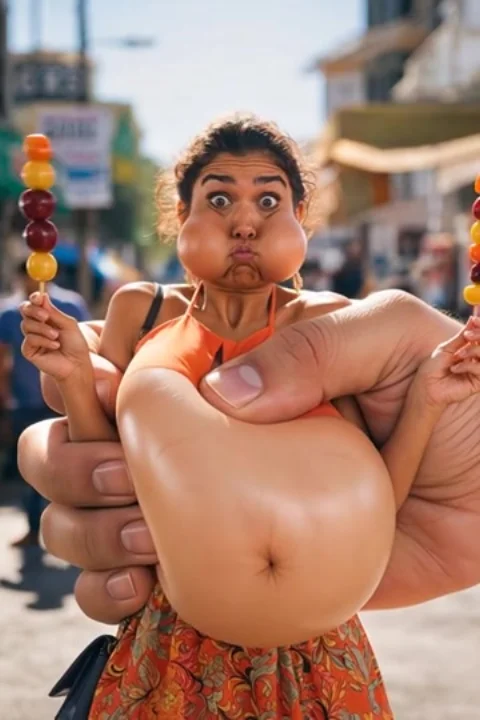
Realism in AI video comes down to a handful of specific details that are individually small but collectively make the difference between something that reads as genuinely filmed and something that reads as obviously synthetic.
Consistent lighting and shadow
As a subject moves or deforms, shadows and highlights need to shift believably along with it — inconsistent lighting between frames is one of the fastest ways a clip reads as fake.
Physically plausible motion
Even an exaggerated, fantastical effect like a giant-hand squeeze needs internally consistent physics — compression that causes plausible swelling elsewhere, a natural bounce-back, a fixed camera — to feel like a real (if surreal) recorded moment rather than a broken render.
No unnecessary camera movement
A shaky or drifting camera adds a variable that's hard for a model to keep consistent — locking the camera fully in place, as most of these effects do, removes an entire category of potential visual glitches.
Why do some AI videos have extra fingers or warped hands?
Hands are historically one of the hardest things for image and video models to render consistently, due to their complex, variable geometry — it's a well-known weak spot that's improved significantly but not disappeared entirely.